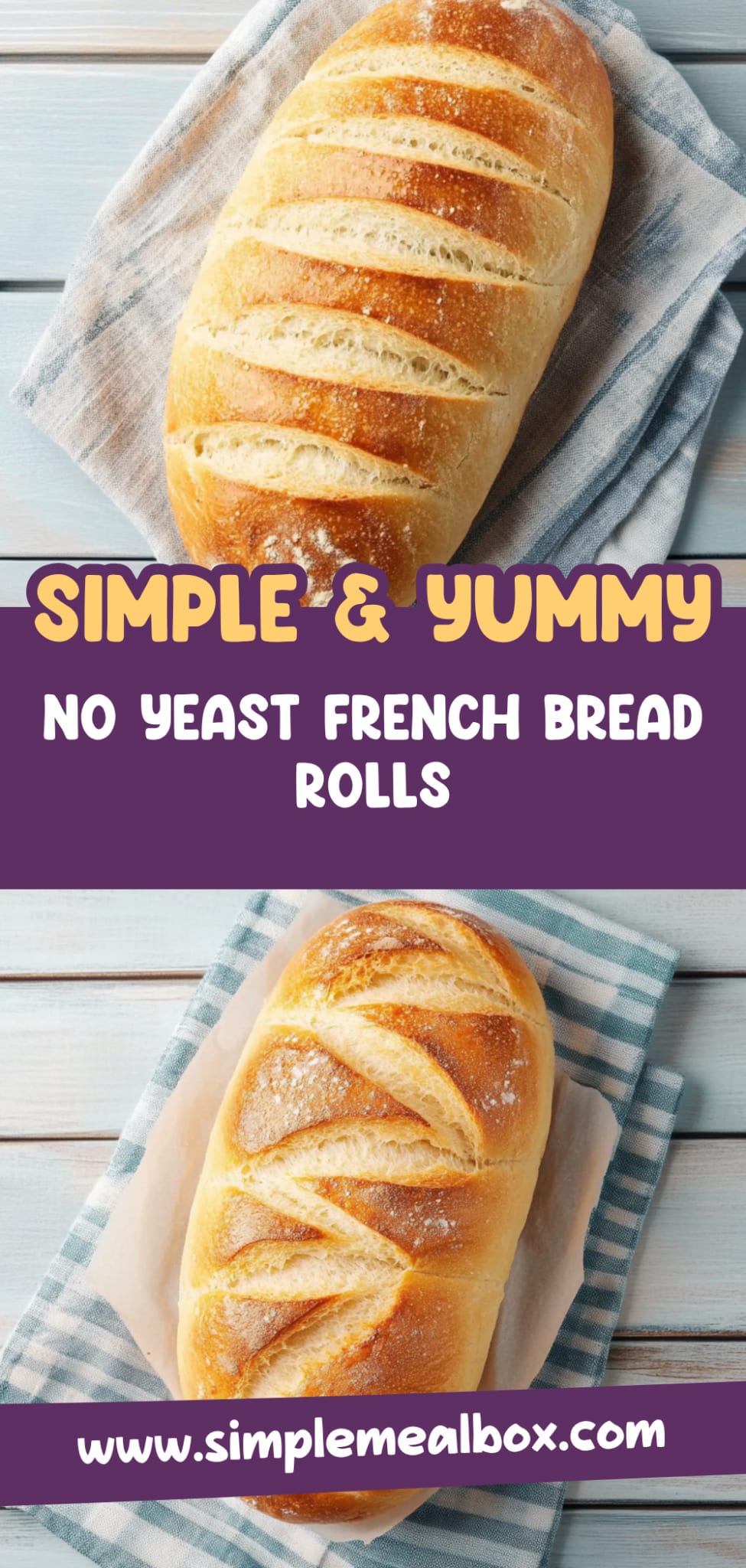
No Yeast French Bread: Quick and Deliciously Crispy
Quick, Crisp, and Oh-So-Delicious
I remember the first time I made this No Yeast French Bread on a whim, craving something warm and comforting but short on time. It came together in mere minutes, filling my kitchen with the most inviting aroma, and the texture was perfectly crusty on the outside yet soft and fluffy inside—just like I hoped for!
What makes this bread truly special is how it brings everyone together; the moment you pull it from the oven, you can feel the anticipation in the air. It’s perfect for cozy family dinners, impromptu gatherings with friends, or even a romantic date night when you want to impress without the fuss.
Enjoy it fresh out of the oven with a smear of butter or dip it into your favorite soup for a heartwarming meal. You can also top it with garlic and herbs for an extra burst of flavor that will have everyone asking for seconds. Trust me, once you try this No Yeast French Bread, you’ll want to make it again and again!
What are No Yeast French Bread?
No Yeast French Bread is a delightful and uncomplicated bread recipe that allows you to enjoy the classic flavors of French bread without the need for yeast, making it perfect for those who want to skip the rising time. This quick bread features a simple blend of dry ingredients, including all-purpose flour, baking powder, and salt, combined with wet ingredients like milk and olive oil. The result is a crispy exterior that gives way to a tender, airy interior—ideal for pairing with soups or enjoying fresh out of the oven. Baked in the oven, this recipe offers an easy cleanup and minimal effort, allowing you to savor delicious homemade bread without the fuss.
Perfect For:
Busy Weeknights: This No Yeast French Bread comes together in just 30 minutes, making it the perfect accompaniment for those hectic evenings when you need a satisfying meal without a long prep time.
Budget-Friendly Meals: Enjoy the taste of freshly baked bread without breaking the bank. This recipe uses simple pantry staples, allowing you to create delicious French bread at home for a fraction of the cost.
Family Gatherings: Whether it’s a casual dinner or a family get-together, this bread is easy to make in larger batches, ensuring everyone has enough to enjoy alongside their favorite dishes.
Cozy Nights In: There’s nothing quite like the aroma of warm bread filling your home on a chilly evening. Pair this No Yeast French Bread with some homemade soup for the ultimate comfort meal that brings everyone together.
No Yeast French Bread Ingredients
For the Dough
- 2 cups all-purpose flour (plus extra for dusting) – This is the base of your bread, providing structure and texture.
- 1 tablespoon baking powder – This ingredient helps the bread rise quickly without yeast.
- 1 teaspoon salt – Salt enhances flavor and balances the sweetness of the dough.
For the Wet Mixture
- 1 cup milk (can use any type) – Milk adds moisture and richness to your bread.
- 2 tablespoons olive oil – Olive oil contributes a lovely flavor and keeps the bread tender.
Kitchen Equipment You’ll Need
- Mixing bowls
- Measuring cups
- Measuring spoons
- Rolling pin or flat surface for kneading
- Baking sheet
- Parchment paper
- Sharp knife
How to Make No Yeast French Bread
Step 1:
Preheat your oven to 375°F (190°C). This will ensure your oven is hot enough to give the bread a nice rise and golden-brown crust as it bakes.
Step 2:
In a mixing bowl, combine 2 cups of all-purpose flour, 1 tablespoon of baking powder, and 1 teaspoon of salt. Whisk these dry ingredients together until they’re well mixed, which will help distribute the baking powder evenly throughout the flour.
Step 3:
In a separate bowl, pour in 1 cup of milk and add 2 tablespoons of olive oil. Stir these wet ingredients together until combined; this mixture will provide moisture and richness to your bread.
Step 4:
Gradually pour the wet ingredients into the dry mixture while stirring. Keep mixing until a dough starts to form; it should come together nicely without being too sticky.
Step 5:
Transfer the dough onto a floured surface and knead for about 5 minutes. You want to work it until it’s smooth and elastic, which will help develop its texture.
Step 6:
Shape the kneaded dough into a loaf that fits comfortably on your baking sheet. Place it on a sheet lined with parchment paper for easy removal later.
Step 7:
Using a sharp knife, cut a few slashes on top of the loaf. This not only gives it a rustic look but also allows steam to escape during baking, helping achieve that perfect crust.
Step 8:
Slide your loaf into the preheated oven and bake for 25-30 minutes. Keep an eye on it; you’ll know it’s ready when it turns a beautiful golden brown and sounds hollow when tapped.
Step 9:
Once baked, remove the bread from the oven and let it cool on a wire rack for a few minutes before slicing. This resting period helps set the texture, making it easier to cut through that delicious crust!
Tips
- Use room temperature milk: This helps the dough come together more easily and creates a softer texture, making it simpler to knead and shape.
- Don’t skip the kneading: Kneading the dough for about 5 minutes develops gluten, which gives the bread structure and chewiness, ensuring a satisfying bite.
- Check your baking powder: Ensure it’s fresh by adding a bit to hot water; if it bubbles vigorously, it’s good to go! Expired baking powder can lead to dense bread that doesn’t rise properly.
- Slash the top of the loaf: Making slashes allows steam to escape during baking, resulting in a crust that’s beautifully crisp instead of gummy or flat.
- Cool before slicing: Letting the bread cool for a few minutes after baking allows the interior to set properly, preventing it from becoming doughy when sliced.
- Experiment with olive oil flavors: Using flavored olive oils, such as garlic or rosemary, can elevate the taste of your bread and give it an extra layer of flavor that complements any meal.
Optional Ingredients
- Cheddar cheese: Grate some sharp cheddar into the dough for a rich, savory flavor that melts beautifully, creating pockets of cheesy goodness throughout the bread.
- Red pepper flakes: Add a teaspoon or two to the dry ingredients for a hint of heat that elevates the flavor profile, giving your bread a delightful kick.
- Chopped rosemary: Incorporate fresh or dried rosemary into the dough for an earthy aroma and a burst of herbal flavor that pairs wonderfully with the olive oil.
- Zest of lemon: Grate in some lemon zest for a bright, citrusy note that adds a refreshing contrast to the bread’s warmth and enhances its overall flavor.
- Honey glaze: Brush the top of the baked loaf with honey mixed with a little warm water for a glossy finish and a touch of sweetness that balances perfectly with savory toppings.
What to Pair with No Yeast French Bread?
For a delightful and refreshing start to your meal, consider serving a fresh salad alongside your No Yeast French Bread. A simple arugula salad tossed with cherry tomatoes and a light vinaigrette offers a peppery bite that complements the bread’s soft texture. The acidity from the dressing also helps to balance the richness of the olive oil in the bread, making each bite feel bright and satisfying.
Steamed or roasted vegetables are another excellent pairing that enhances the overall dining experience. Think of sweet roasted carrots and earthy Brussels sprouts drizzled with balsamic glaze; their natural sweetness contrasts beautifully with the subtle saltiness of the bread. This combination not only adds vibrant colors to your plate but also provides different textures that elevate each mouthful.
If you’re in the mood for comfort, consider pairing your bread with creamy mashed potatoes or fluffy corn on the cob. The buttery richness of mashed potatoes melds seamlessly with the warm, crusty exterior of the bread, while corn adds a delightful crunch and sweetness that rounds out your meal. These hearty sides create a comforting atmosphere that’s perfect for family gatherings or cozy nights in.
Finally, don’t forget to think about drinks or dessert! A chilled glass of Sauvignon Blanc pairs wonderfully, as its zesty notes cut through any heaviness and refreshes your palate between bites. For a dessert option, serve fresh berries with a dollop of whipped cream — their natural sweetness and lightness provide a lovely finish after enjoying the savory elements of your meal.
Variations and Substitutions
Whole Wheat Flour instead: Swap out all-purpose flour for whole wheat flour to create a denser, nuttier loaf that adds more fiber and nutrients. The bread will have a heartier texture and a slightly sweet, earthy flavor that pairs wonderfully with soups and salads.
Almond Milk or Coconut Milk instead: For a dairy-free option, replace regular milk with almond or coconut milk. This change not only accommodates lactose intolerance but also infuses the bread with a subtle nutty or tropical flavor, making it an exciting addition to any meal.
Herbs de Provence instead: Add 1 tablespoon of dried Herbs de Provence to the dry ingredients for an aromatic twist. This blend of herbs will give your French bread a fragrant herbal note that complements Mediterranean dishes beautifully, elevating it from simple to sensational.
Cheddar Cheese addition: Incorporate 1 cup of shredded cheddar cheese into the dough for a cheesy variation that’s perfect for snacking. The cheese melts during baking, creating pockets of gooey goodness that add both flavor and richness to each slice.
Garlic Powder addition: Stir in 1 teaspoon of garlic powder to the dry ingredients for an extra kick of flavor. This simple addition transforms your bread into a savory delight, perfect for pairing with pasta or enjoying on its own with butter.
Gluten-Free Flour Blend instead: Use a gluten-free flour blend in place of all-purpose flour for a gluten-free version of this recipe. Make sure to choose one that includes xanthan gum or add it separately; this way, you can still enjoy a soft and satisfying loaf without gluten.
Chili Flakes addition: Spice things up by adding 1 teaspoon of chili flakes to the dry ingredients. This will give your French bread a delightful heat that pairs well with soups or stews, making it perfect for those who love a little kick in their meals.
To store your No Yeast French Bread in the refrigerator, allow it to cool completely before placing it in an airtight container or wrapping it tightly in plastic wrap. This bread will keep well for about 2 to 3 days in the fridge. When you’re ready to enjoy it again, simply reheat slices in a toaster or oven at a low temperature for a few minutes to help restore its crusty texture.
This bread does not freeze particularly well due to its texture, which may become slightly denser once thawed. If you choose to freeze it, slice the bread before wrapping individual pieces in plastic wrap and then placing them in a freezer-safe bag. It can be stored frozen for up to 2 months; when ready to eat, thaw overnight in the refrigerator and reheat as mentioned above for better results.
FAQ
Can I use whole wheat flour instead of all-purpose flour for this recipe?
Yes, you can substitute whole wheat flour for all-purpose flour, but keep in mind that it may result in a denser loaf. You might need to adjust the liquid slightly, as whole wheat flour absorbs more moisture.
What should I do if I don’t have baking powder?
If you don’t have baking powder, you can make your own by combining 1 teaspoon of baking soda with 2 teaspoons of cream of tartar. This homemade mixture can be used as a direct substitute in the recipe.
How do I know when the bread is done baking?
The bread is done when it turns golden brown on top and sounds hollow when tapped on the bottom. If you’re unsure, inserting a toothpick into the center should come out clean.
Can I prepare the dough ahead of time and bake later?
While it’s best to bake the dough fresh for optimal texture, you can prepare the dough and shape it into a loaf. Wrap it tightly in plastic wrap and refrigerate for up to a few hours before baking; just allow it to come to room temperature before placing it in the oven.
Is it possible to make this recipe dairy-free?
Absolutely! You can replace the milk with any dairy-free alternative such as almond milk, soy milk, or oat milk. Just ensure that your chosen milk has a similar consistency for the best results.
What type of olive oil works best for this recipe?
Any type of olive oil will work well in this recipe. Extra virgin olive oil adds a richer flavor, while light or regular olive oil has a milder taste if you prefer something less pronounced.